 AnimeGameVerse
Genshin Impact: How to Create Custom Characters Step-by-Step Guide
Discover Genshin Impact custom character creation options and avatar customization tools for a truly personalized gaming experience.
Many gamers are wondering how to make their own character in Genshin impact. Instead of an avatar creator like you'd see in other Western RPGs, Genshin employs a method of providing distinct characters without giving the players an on-screen character creation menu to select their options from. However, with all of the advances made in 2026, players have different avenues available to help create something that represents them personally as their own custom characters while maintaining the feel of Genshin, either through the official customization options, fan-created OCs, or new AI-based development tools capable of replicating the Teyvat art style.
The variance between what players expect from Genshin impact (a highly customized avatar creator) and what they're actually receiving (individual characters already created with a specific design, element type, and battle role) is the significant source of confusion surrounding how to create custom characters in Genshin Impact. Unlike some current MMORPGs where you can go to a menu option and modify an existing character's appearance (Hu Tao's hair) and/or outfit (Raiden Shogun's outfit) to match your own preference, Genshin does not.
Constructing Custom Characters Within Genshin's Guidelines
If you're looking to create a custom character for yourself/your gaming group through official Genshin methods, you are limited in options but your options are not useless. As of January 2026, HoYoverse has developed several different ways for its players to personalize their existence through three general categories: official outfits for currently available characters; customizing the appearance of the Traveler character; and custom companion setups for Serenitea Pots.
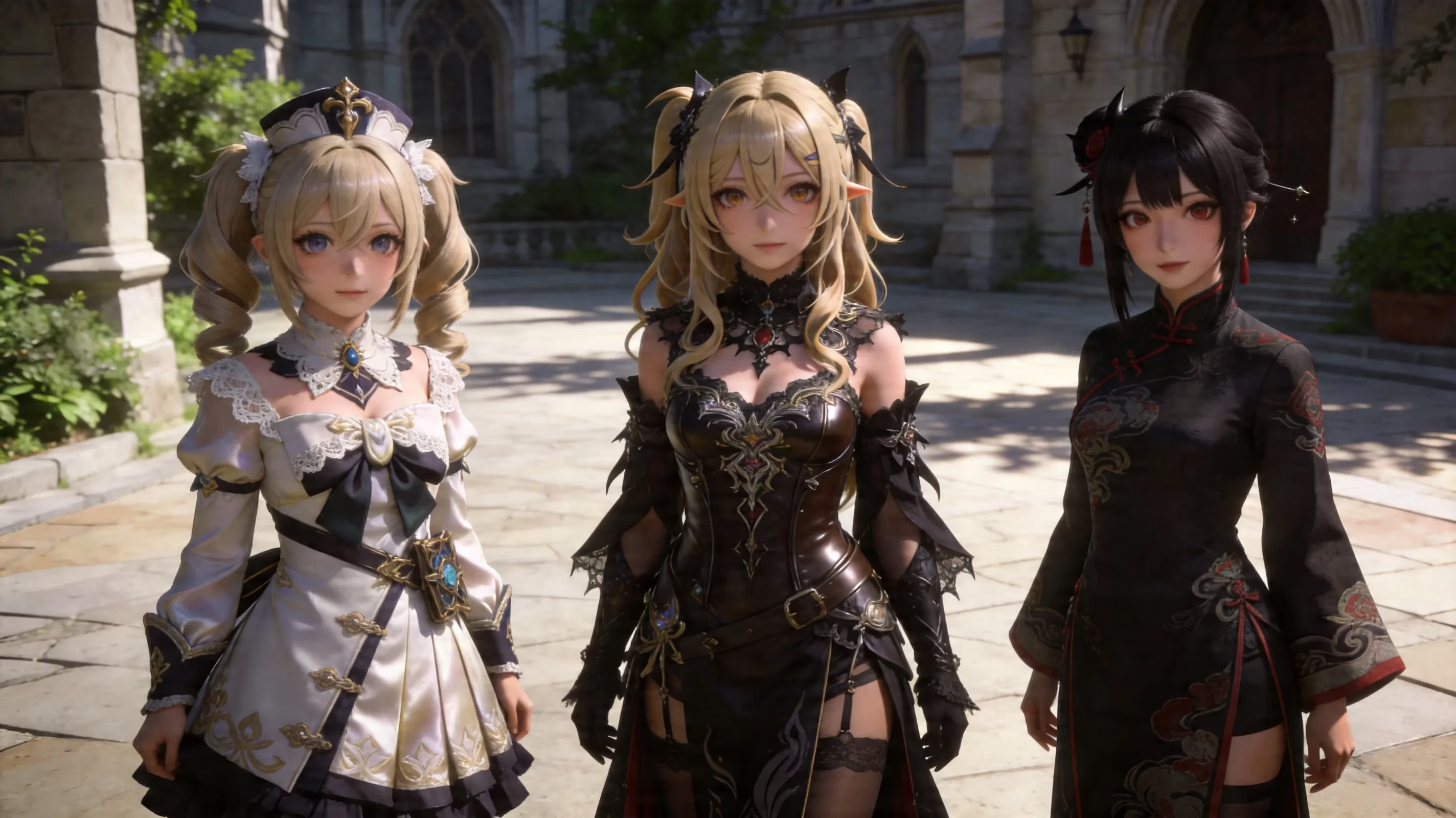
The most visual way in which players can customize characters is by utilizing official character outfits. At the start of 2026, Genshin impact currently has over seventy alternate outfits available for its characters, two of which can be purchased in the in-game shop (for 1,680 Genesis Crystals) and the remainder of the alternate outfits available through special events. The way we see Barbara's Summer skin, Fischl's detective style skin, Hu Tao's dancer costume - none of these change the way the characters are played/will play, but do change how we see them. In essence, they are a compromise made by HoYoverse: to increase style diversity and maintain lore integrity for their characters.
Although there isn't a character creator (yet), in regards to having the ultimate customization system for the Traveler, we do have a fair bit of flexibility when controlling the two/three elements through the way in which they can interact (again, when selecting the Traveler at start: Aether or Lumine), when changing their elemental resonance by interacting with Statues of The Seven, through personalization such as name cards, custamo, and other text at profiles, account can have some feel as your own (especially in co-op play).
Another avenue that we have is through the "Serenitea Pot" which gives us a more indirect way to represent our character; you do not get to directly edit the models themselves but you have some freedom to place a companion in a custom created environment and create a scene around them. For example; Zhongli in a highly furnished to Liyue style study, Nahida in a corner of the forest where dreams happen, and Furina in the style of a very dramatic Fontaine salon; those can feel different even though their individual models were created and have not changed.
In 2026 when we will get to see an actual UGC (user generated content) system we will have to wait to see how the developer notes have given us some slight insight into the tools for creativity that will be attached to custom spaces, game modes and other more widely produced by players. There is the possibility that if we see this happen before this year ends it may change the way even more how custom characters will be created in Genshin Impact or even how players display character irregular ideas in their particular official environment/ ecosystem. Otherwise there is still no consideration for an avatar creator. ### How To Use External Tools For Custom Character Creation In Genshin Impact
To gain true creative freedom, players must step out of Genshin Impact’s game client. That’s where the fun starts! A lot of the creative community has developed some great resources for players who want to use custom characters as their own original creations (O.C.s) in Genshin Impact, but look like they belong in the game’s canon.
One way to start making your O.C. is with Picrew-style O.C. makers. There are many fan-built generators like the O.C. Maker that allow players to select different parts from presets while remaining true to Genshin Impact’s overall aesthetic. Players can filter items like Vision types, weapon types, clothing inspired by cultures in the various nations, and personalities, which helps a lot. Picrew-style O.C. generators are far more useful than traditional generic anime avatar makers because they are designed with a focus on silhouette, elemental colours, and region-based motif designs.
Basic Workflow Steps
The common process for creating your own custom character is as follows — players should:
-
Develop a core identity; e.g., “Hydro Bow Performer from Fontaine”.
-
Select visual identifiers; e.g., hairstyle, cape shape, and elemental symbols.
-
Generate several different character types and select the best silhouette.
-
Compare selections and improve or modify the best silhouette.
This method is very effective because it begins with the written description of a character and continues with structural components. A player can create an attractive, finished piece of artwork that is suitable for use in social media, role playing, commission work, or even as concept art for a VTuber with minimal artistic ability.
Improvements To AI Character Generators
By 2026, A.I. character generators have improved and continue to improve. Existing tools such as Genshin Object Creation (OC) tools and Komiko AI have the ability to render images that are similar to how characters appear in the Genshin Impact video game. However, having a quality prompt is extremely important; if you have a unclear, overloaded or inconsistent prompt, your output will likely crumble very quickly.
For example, a decent prompt may look something like this:
-
Base Identity: 1girl Cryo vision, polearm.
-
Region Influence: Snezhnaya fur-trimmed wool coat.
-
Visual Traits: Has long Silver hair and sharp Blue eyes.
-
Poseing and Framing: Defensive Stance, looking at viewer, single character.
-
Style / Output: Anime-style, white background.
Layering prompts in this manner will typically produce much better results than presenting one long continuous sentence with every item put together. You want to have the generator recognize the order of your design as a complete structure, not just a list of items to build.
Many of these sites also support safe download and sharing. This is highly significant; many sites allow you to safely save a PNG or JPG format so you can share and post on sites like Discord, Reddit or Twitter. Some communities even create small followings based around good OC designs; most users have not experienced a real character from the game debut in a real as a future character in an upcoming patch. | Customization Depth | Lore Integration | Export Quality Cost || Platform | ||
| --- | --- | --- | --- | --- |
| - Moderate (presets) | - High (regional filters) | - PNG/Social-ready | - Free |
| Generate-O-Matic | - High (prompt-driven) | - Variable (based on prompts) | - High-res PNG/JPG | - Freemium |
| In-Game OCs | - Low (currently only swap outfits) | - Absolute (canon design) | - SS only | - Paid/Free Mix |
Making Your Genshin OC Canonical
Designing your character visually is one thing but making sure they can fit into Teyvat takes some effort on your part to develop.
First, which Vision should be vested? Which weapon? Where will your character hail from?
Characters feel cohesive as part of Teyvat because they have the same element as their weapon and their region. Elements typically feel stronger or less intense, while Regions provide an identity. For Example: Pyro can represent intensity, ambition, or emotional intensity. Cryo can represent restraint, distance, loss, or conflict. Dendro can represent curiosity, analysis, or wisdom.
This isn't the only way to create OCs but it is one way they become a cohesive whole.
You should also consider your OC's weapon. For example, if your OC is a geo claymore user, then your OC will likely be more of a "heavyweight" fighter, more defensive in combat. If your OC is an anemo catalyst user, then you would be more of a "fast-paced" fighter, supporting others, and controlling a large area. By using design elements that are specific to a particular country, including aspects of Fontaine's flowing designs with an underwater theme; Natlan's design characteristics that are heavily influenced by fire; and Inazuma's ceremonial architecture, the character now feels more realistic and not like something random.
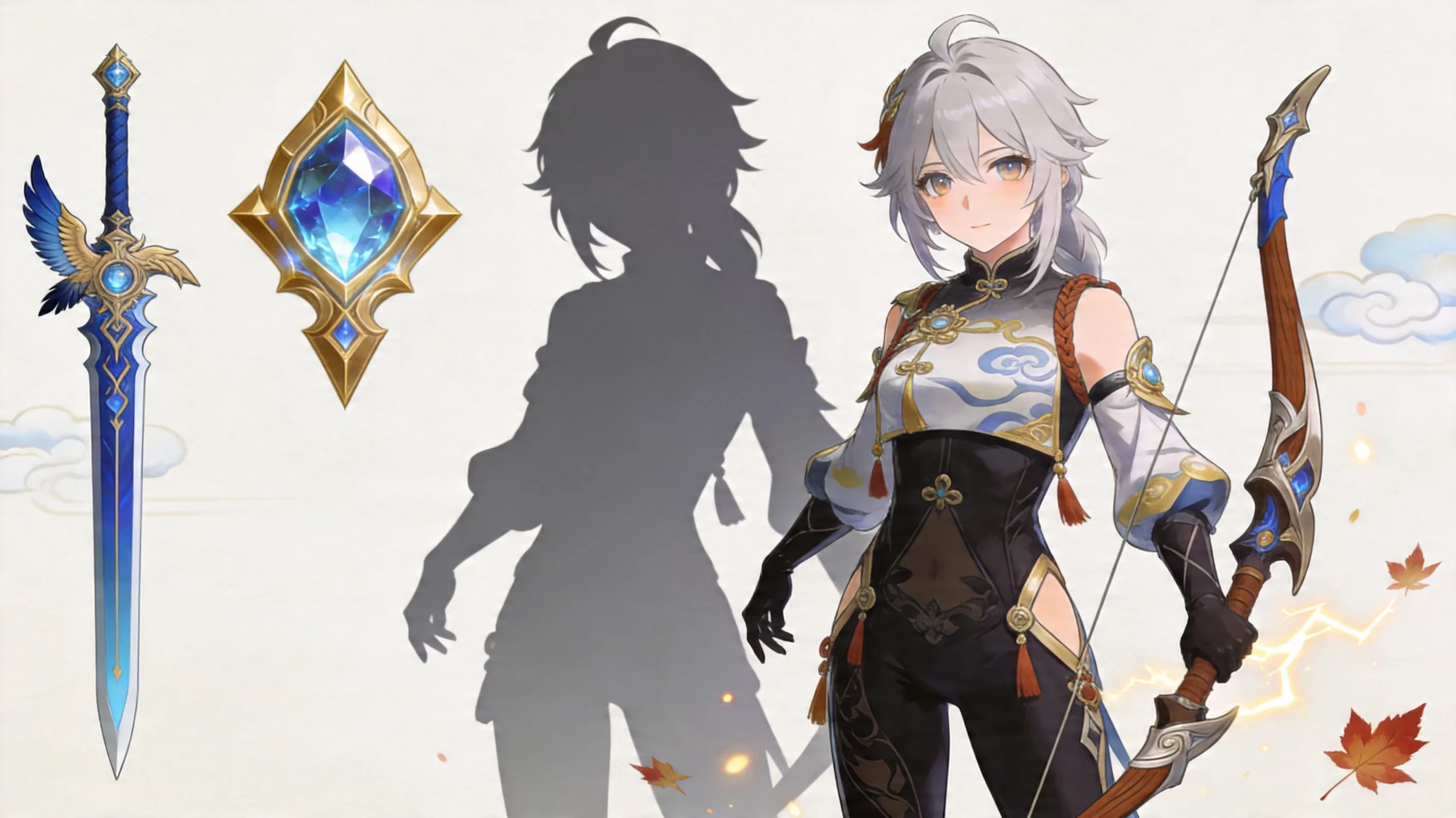
Silhouettes, color schemes, and repeated symbols result in an original character (OC) that resonates with or detracts from its intended audience. Genshin officially-created characters can be identified quickly, regardless of distance. Additionally, in general, strong fan-designed characters will (usually) display two or three repeated design themes throughout the character's complete outfit i.e. crescent moon shapes as a theme throughout hair pins, on the ends of sleeves, and the guards of the weapons; or leaf designs on the jewellery and the fabric of the clothing. The colour scheme must not be overly complicated, and to use one main colour, one secondary colour and several neutral colours, to allow for ease of recognition.
The design of the OC's combat role (e.g. Hyperbloom is a combat role) and its associated elemental reaction identities (e.g. as the origin point for "Vaporizing" would be related to mist and/or water) must be incorporated into the design features of the OC. Many times a fan-designed character worksheet can have its greatest impact by not adding more designs, but including designs that refer to the character's gameplay identity.
Don't forget about the OC's flaws, lore hooks and faction ties—in general, all Genshin official-created characters tend not to be one-dimensional; as an example, an excellent tactician who freezes up during one-on-one fighting, a celebrated duelist but has serious concerns over the morality of duelling, and a scholar who has crossed the ethical lines with their research are more believable because they have flaws. Tying the OC to one faction, one location or one occurrence allows for the OC's backstory to have meaning, rather than being a duplicate of a wiki page. # Character Core Sheet - Genshin Impact
Once you know the character in general, you need to have a core sheet. This will keep the concept from getting lost halfway through, and help keep you on track when designing the character.
-
Character Name: Character's Name
-
Formal Title (Epithet): How the character will be referenced
-
Rarity: Either a four star or five star
-
Element (Vision): The type of elemental vision for your character to have
-
Weapon: Must be a sword, claymore, polearm, bow or catalyst.
-
Role: In the game, will your character be a main-DPS, sub-DPS, support, healer, shield, or driver?
-
Region (or Area) are they in the world of Teyvat? They could be from Mondstadt, Liyue, Inazuma, Sumeru, Fontaine, Natlan or Snezhnaya.
-
Faction(s): Knights of Favonius, Fatui, Adventurer's Guild, Akademiya, etc.
-
Signature Trait: Something about your character's personality that is memorable.
Visual Prompt Formula - Genshin Impact
Once the core sheet is complete, you will want to build out your prompt in block format vs. a giant jumbled up line of text. Doing this tends to provide you with more clean outputs. Also it allows for easier edits.
A good example of how to break out a prompt into blocks is:
-
Face - including eye shape, what type of expression, any facial markings, age range.
-
Hair - including the color, length, style and adornments.
-
Outfit Blocks: top layer, bottom layer, sleeves, boots/cape/armor.
-
Accessories - where on the body will the vision be located? Where will any jewelry/gloves/belt/charms be located on the body?
-
Materials & effects- for example; what material will the clothing be made from - silk, leather, metal. Will there be glowing elemental particles? If yes how and when will they glow?
-
Pose - how does the character hold themselves when they are relaxed (Idle)? How do they hold themselves during battle? Do they stand in front/behind the character(s) or do they look over the shoulder(s) (i.e., are they looking forward? Or directly at the character they are standing next to)?
-
Mood - what emotion does your character project; do they appear calm/stern/playful/mysterious?
This is usually the reason for a muddy AI output; the prompt didn't contain enough clearly distinguished layers or too many conflicting details could have contributed to muddy AI outputs!
How to Create Custom Genshin Impact Characters - Step-by-Step
To make your process of creating a character as simple as possible keep the process in order and in a structured manner! The majority of the successful OC creators use methods that are similar to each other for good reason.
1. Write the concept before going to a generator
Write out a short concept paragraph or at least fill out one of the core sheets first. The core sheet should include name/title/rarity/element/weapon/role/region/faction and one key character trait. Doing this will save a significant amount of time later on.
2. Create the prompt in layers
Build broad to narrow. Start with things like Gender, Age Range, Element, and Region. Once you have those established, create the Face and Hair. Next create the Outfit and Accessories, and finally create the Effects, Pose and Background. It is incredibly basic but doing this serves as a great way of keeping cluttered outputs at bay.
3. Generate multiple versions at once
When generating, generate 4-6 versions of the character in a single batch if your tool allows. Compare the multiple versions of the character side by side. Start with comparing the silhouette of the characters before moving on to comparing the finer details. Typically, one of the versions will have a good overall silhouette and will be stronger overall versus another version that has the best accessories.
4. Refine the best draft
Identify the version of the character that is strongest overall and then change one element of the draft at a time. For example, If you have the best hair but poor outfit, then only make small adjustments until you achieve the desired look. It is usually better to have small adjustments than to completely restart from scratch.
5. Save alternate versions
Regardless if the draft became the final draft or not, you should save all draft versions. The near misses can often be used as alternate outfits, special event skins, seasonal concepts, or used when redesigning a character in the future. Build a Complete Character Reference.**
Once the final design is solidified, you will have to create a complete character reference set. Ideally, this character reference set will include:
-
A front image view
-
An expression reference image
-
Accessory close up reference images
-
Weapon concept reference image
-
An elemental burst visual concept
-
An original prompt formula.
The last part of the character reference is more important to the character than most people realize. If you decide to do a summer skin or winter outfit redesign at a later date, having your original prompt is an absolute godsend.
Common Mistakes & Fixes When Creating Custom Characters in Genshin Impact
Even established creators run into the same issues when figuring out how to create a custom character in Genshin Impact. Fortunately, a majority of these issues can be corrected once you know where to look.
One of the top issues is region mashups that conflict with each other on a lore level. The use of very mechanical trims from Fontaine mixed with an Inazuman-style kimono base with multiple layers of Sumerian-based academic accessories will create a character that visually feels like too much going on at once without depth. The fix is very simple; use one of the main regional influences and tone down or change the minute influences’ impact.
The overloaded prompt syndrome is another reoccurring problem that many creators run into. If your prompt has ten different accessories, different lighting for each accessory, layer effects for each accessory, and three outfit concepts for each accessory, the likely outcome is your custom character will have a very muddy appearance. Be very harsh when establishing your prompt and only include three dominant details rather than ten weak ones.
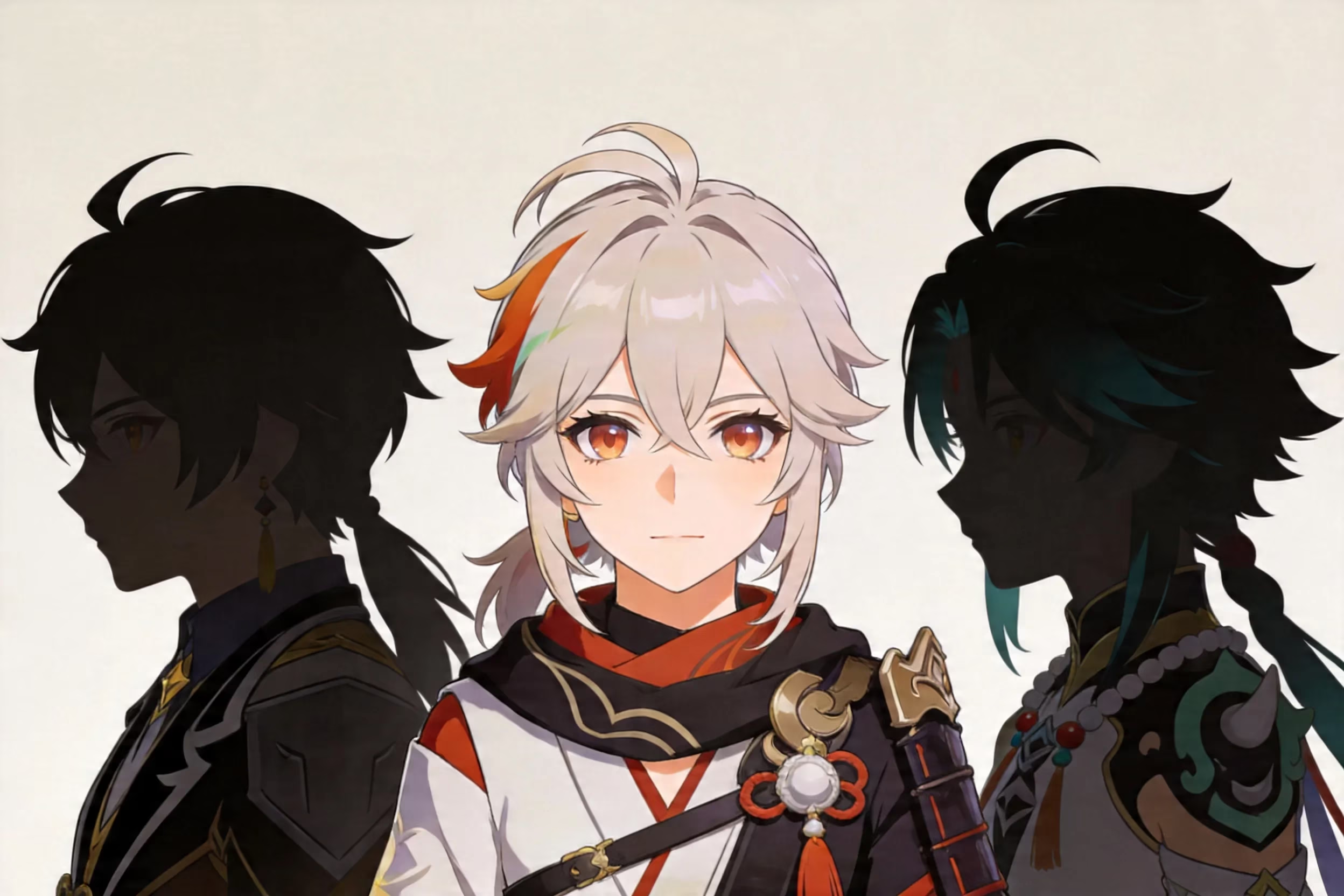
The generic anime face syndrome is a real problem. When you create a lot of fan-based characters, you'll find out that a lot of them end up with the same similar soft expression and eye shape - polished, bland, and easily forgotten! A lot of time — if we wiz through the game or something, we'll usually find out that an official Genshin character has 1-2 distinguishing facial features which make them easily recognizable. By examining a character’s facial features up close and examining the aspects that make each of their faces unique, you can use this detail while creating and designing your own character as well.
Copyright and modding risks must also be taken into account. There are risks that come with using a mod or third-party tools to import your character into the actual game. HoYoverse does not offer support for unauthorized modifications and does not allow them to be done on console or mobile devices. Modding on PC has a gray area which includes some cosmetic modding, but this type of modding is also unsupported.
So to fully answer your question about how to create custom characters in Genshin Impact — if you mean to say "create" your custom characters exclusively using official character creation tools, then there is still limited capability to customize your characters to that extent — all you can do in the official game's settings is create a custom outfit for your Traveler or make another character in a Serenitea Pot.
If you'd like to create an even more personalized character/completely unique design for your character, creating your character from a fan-made character creator will give you the most custom-created product. If you’re starting, creating your custom-designed character should be as simple as possible. First, choose a core character sheet (that includes the basics of your character). Next, build on and layer your prompt before creating variations of your OC and refining them to its best possibility so that you have a finalized reference sheet that you can share.
To confirm that you correctly created your OC, you should check off this quick checklist.
-
Matches vision, weapon and region
-
Silhouette can be identified from outside and quickly
-
Color palette is controlled/usual colors
-
Clearly has 1 emphasized canon faction/lore anchor
-
Has at least 1 feature that can be easily remembered about them
-
The prompts for creating your OC have been saved for future edits/alternate outfits
-
If you opted for modding your OC into the game, you are comfortable with the risk involved
At this point in time, this is the ideal approach. You should continue to create your OC with the use of official Genshin Impact systems (which do exactly what they are meant to do); use third-party tools to finish your custom-designed character; and your OC should be built with the lore of Teyvat in mind while creating your character. If you adhere to these guidelines, you are much more likely to have your OC look/feel like a true Genshin Impact character, and not a random anime-inspired character!
Comments